
Money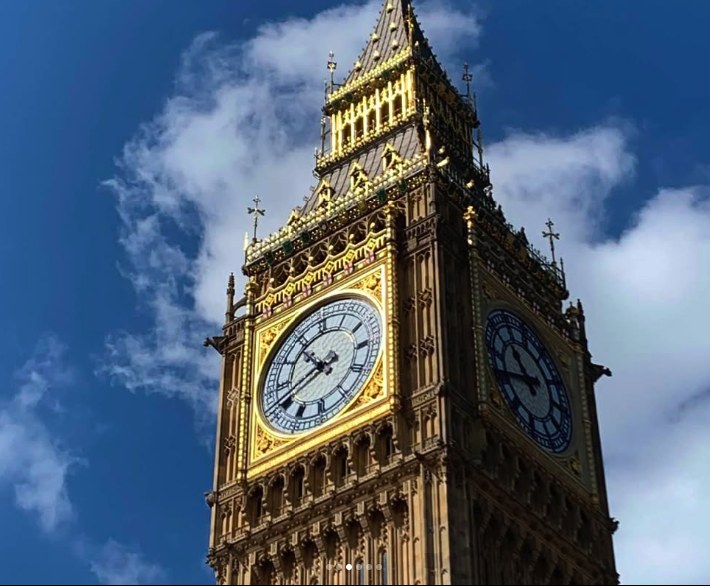
The Big Ben Tour at the Houses of Parliament
In this guide
- What the Big Ben tour actually is
- What does it cost?
- Where do you buy a ticket?
- Why is it not part of any tour you can book?
- Who can and cannot do the climb?
- Is it worth £55?
- The four dials, and what is behind them
- Big Ben, Elizabeth Tower or Great Clock?
- What changed in the 2017 to 2022 conservation?
- Can you combine the tower with a Palace tour?
- What is the climb actually like?
- The Great Bell and the quarter bells
- The days the bell matters most
- Who should skip the climb
- Where to see the tower for nothing
- What you are climbing through
- Planning a day around a tower slot
- The climb against the alternatives
- The short version
What the Big Ben tour actually is
It is a climb. Three hundred and thirty-four steps up the inside of the Elizabeth Tower, with no lift, ending in the belfry beside the Great Bell. On the way you see the clock mechanism that has been running since 31 May 1859, and if your slot lands on the hour you stand next to the bell while it strikes.
It takes up to ninety minutes with planned pauses on the way up, which is where the guide does most of the talking. Ear defenders are handed out, because the mechanism and the bells are loud at close range.
What does it cost?
| Detail | Elizabeth Tower tour |
|---|---|
| Adult | £55 |
| Child, ages 11–17 | £35 |
| Minimum age | 11, with no exceptions |
| Steps | 334, no lift |
| Length | Up to 90 minutes |
| Maximum per booking | 8 tickets |
| Refunds | None — non-refundable |
| Sold by | UK Parliament only |
Prices and rules published by UK Parliament and checked in August 2026. Tickets are released in batches and the price applies to tours from 1 August 2026.
Where do you buy a ticket?
From Parliament, and nowhere else. Two channels: the official ticketing site, or in person at the ticket office at Portcullis House on Victoria Embankment, London SW1A 2LW. There is no third party, no reseller and no package that includes it.
Tickets are released in batches rather than continuously, and they go quickly when they do. The practical approach is to decide the tower matters, watch for the release, book it first, and build the rest of your Westminster day around whatever slot you are given.
Why is it not part of any tour you can book?
Because Parliament does not wholesale it. The tower tour has an age limit, a hard cap of eight per booking, its own release windows and a no-refund policy, and none of that fits how an operator packages a product. So no listed trip includes the climb, and the honest ones say so.
What every Westminster walking tour sells instead is the view and the explanation. That is a real thing — a Blue Badge guide standing you in the right place on Parliament Square with the history of the clock is a good twenty minutes — but it is not the tower.
Who can and cannot do the climb?
You must be eleven or over. There is no younger version and no exception, and families with a ten-year-old are the group this most often surprises. You also need to be comfortable with 334 steps and with high noise levels, and assistance dogs cannot come up because of the stairs and the bells.
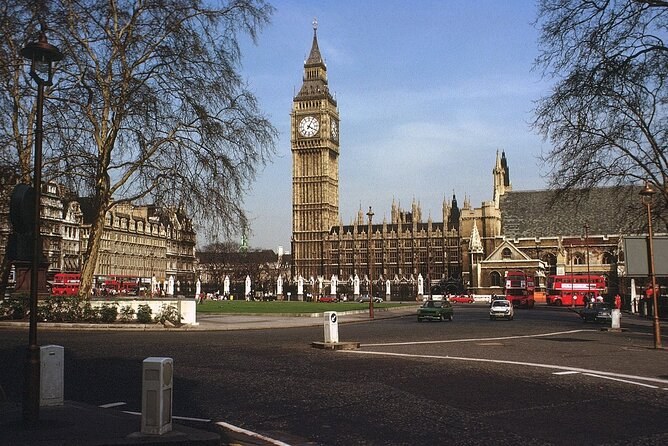
If any of that rules you out, the consolation is free and genuinely good: stand on Parliament Square a few minutes before the hour. The quarter bells play the Westminster Quarters first, then the Great Bell strikes.
Is it worth £55?
Do the arithmetic rather than the adjectives. Ninety minutes, a mechanism that was the most accurate clock in the world when it was built, and standing beside a bell most people only ever hear. Against that: no lift, a non-refundable ticket and a slot you do not choose.
If you have any interest in engineering or in the building itself, it is the best ninety minutes in Westminster. If you mainly want the photograph, the free view from Westminster Bridge gives you that and costs nothing.
The four dials, and what is behind them
Each dial is seven metres across and built from six pieces of ironwork bolted together, glazed with 324 separate panes of opal glass. Augustus Pugin drew the frames while he was designing the interiors of the new Palace, and they were among the last things he worked on.
Behind them sits the mechanism that drives all four, and the way it is kept accurate is one of the details visitors remember longest: a stack of old penny coins on the pendulum. Adding or removing one changes the rate by a measurable fraction of a second a day, which is the sort of Victorian solution that has never needed improving.
On the climb you pass the dial level from the inside, where the glass is lit from behind and the numerals read in reverse. It is the single most photographed view of the tour, and one of the reasons the ninety minutes does not feel long.
Big Ben, Elizabeth Tower or Great Clock?
Three names for three different things. Big Ben is the Great Bell. The tower was the Clock Tower until 2012, when it was renamed the Elizabeth Tower for the Diamond Jubilee. The Great Clock is the mechanism driving the four dials.
Everybody, including Parliament's own ticketing, sells the experience under the shortest name. The tower's own page has the rest of the detail.
What changed in the 2017 to 2022 conservation?
Almost everything you can see. The tower spent five years inside scaffolding for the largest conservation project in its history: the clock mechanism removed and rebuilt, the ironwork repaired, the dials re-glazed and the original colour scheme restored, from the gilt cross and orb at the tip to the foot of the staircase.
The dials were designed by Augustus Pugin, each built from six pieces bolted together and glazed with 324 separate panes of opal glass. What you photograph today is closer to his intention than anything visitors saw for a century.
Can you combine the tower with a Palace tour?
Yes, but as two separate bookings on the same day. The Palace tour runs Saturdays and weekdays in recess; the tower runs to its own schedule. If both land on one day, do the tower first while you are fresh, then the Palace.
Allow a clear hour between them. Both need their own security screening and the tower tour can run to the full ninety minutes. compare Parliament tours side by side covers the ways into the Palace itself.
What is the climb actually like?
Three hundred and thirty-four steps in a spiral, in a shaft narrower than you are picturing, with no lift and no shortcut. The tour builds in planned pauses, and those are where the guiding happens rather than being purely a rest — you stop at the clock mechanism, at the dial level, and in the belfry.
Most reasonably mobile adults manage it without difficulty. It is the sustained nature rather than the gradient that catches people: there is nowhere to stop that is not a scheduled stop, and turning back partway is not practical.
At the top the noise is the thing nobody expects. Ear defenders are issued and you should wear them; standing beside a bell of that size while it strikes is a physical sensation as much as a sound.
The Great Bell and the quarter bells
Big Ben strikes the hour. Four smaller quarter bells play the Westminster Quarters, the sixteen-note phrase written for Cambridge in 1793 and borrowed here, and they run before each strike. That is why standing on Parliament Square just before the hour gives you the full sequence rather than a single note.
The Great Clock began keeping time on 31 May 1859 and the Great Bell was heard for the first time on 11 July that year. When it was built the clock was the largest and most accurate in the world, and it remains the biggest striking and chiming turret clock in the United Kingdom.
The days the bell matters most
New Year's Eve and Remembrance Sunday are the two occasions when the bell carries beyond Westminster. During the 2017 to 2022 conservation, when the clock was largely silent, it was brought back specifically for both — which tells you how much weight those two moments carry.
If your visit falls near either, the free option is the one to take: stand within earshot on the square or the bridge. No ticket gets you a better experience of the bell than being outside underneath it at the right minute.
Who should skip the climb
Anyone under eleven, because the age limit is absolute. Anyone who would find 334 steps in a confined spiral difficult, because there is no way down other than back the way you came. Anyone travelling with an assistance dog, which cannot make the climb. And anyone sensitive to loud noise, even with ear defenders.
None of that is a reason to skip Westminster. The Palace tour is step-free for most of its route, the public galleries are free, and the tower is just as impressive from the square. What you lose is the mechanism, and there are 360-degree virtual tours of it published by Parliament for nothing.
Where to see the tower for nothing
- Eastern end of Westminster Bridge — the classic frame, tower clear of the roofline.
- Parliament Square — through the railings, with the Palace pinnacles behind.
- The South Bank, early morning — the east face catches the sun and the river is still.
- Victoria Embankment — the long view along the water, best at dusk.
- On the hour, anywhere close — the quarters, then the strike.
What you are climbing through
The tower went up as part of Charles Barry's rebuilding of the Palace after the fire of 16 October 1834, and the clock stage is Augustus Pugin's work — among the last things he designed before his death. Each of the four dials is built from six pieces bolted together and glazed with 324 separate panes of opal glass.
At 96 metres the tower is not the tallest on the building; the Victoria Tower at the southern end is 98.5 metres and for many years was the tallest square stone tower in the world. Almost nobody notices, because the clock takes the eye.
The climb takes you past the mechanism itself, which is the part most visitors find unexpectedly moving: an assembly of Victorian ironwork that has been keeping the time of a country since 1859.
Planning a day around a tower slot
The tower is the least flexible thing in Westminster, so it goes in the diary first and everything else moves. A morning slot leaves the afternoon for the Palace or the Abbey. An afternoon slot means doing the Abbey at opening, then Parliament, then climbing.
Do not book a tight lunch either side. Security, the climb and the descent together fill more of the middle of a day than the ninety-minute figure suggests.
The climb against the alternatives
Set the tower tour beside the other ways of experiencing it and the choice becomes clearer. Each of these is a real option and only one of them costs £55. The climb is the only one that puts you next to the mechanism and the bell; everything else is about the tower rather than inside it.
| Option | Cost | Time | What you get |
|---|---|---|---|
| Elizabeth Tower climb | £55 adult | up to 90 min | The mechanism, the belfry, the bell at close range |
| Guided Westminster walk | from $40 | 3–4 hours | The tower explained from the square, plus the Abbey |
| Standing on the square at the hour | free | 5 minutes | The quarter bells, then the strike |
| Westminster Bridge, east end | free | as long as you like | The classic photograph, tower clear of the roofline |
| Parliament's own virtual tour | free | 20 minutes | 360-degree views inside the tower |
Costs and times as published in August 2026. The free options need no booking at all, and the virtual tour can be taken before you travel.
The short version
£55, eleven and over, 334 steps, no lift, ninety minutes, non-refundable, sold only by Parliament and released in batches. Book it first if you want it. If you cannot get a slot, the walking tours put you under it with somebody who can explain it, and the hourly strike is free to anybody standing on the square.
London Parliament Tours compares the tours that take in the tower from the pavement, and visitor information covers the rest of a Westminster visit.
Tours that fit this guide
Picked for what this guide covers, not for what sells.