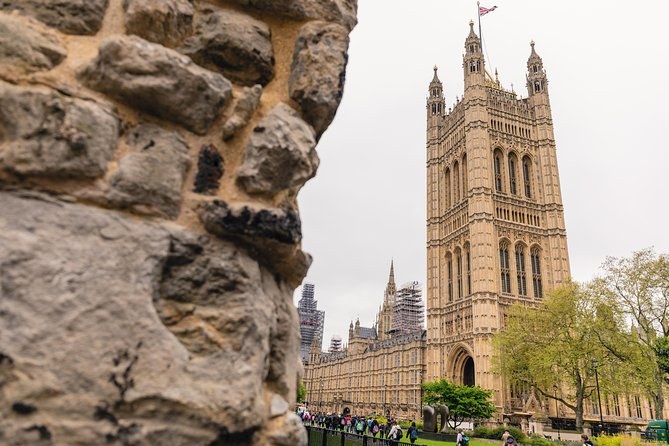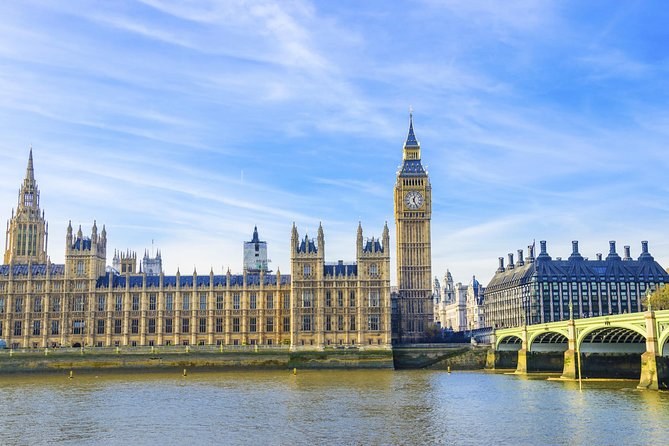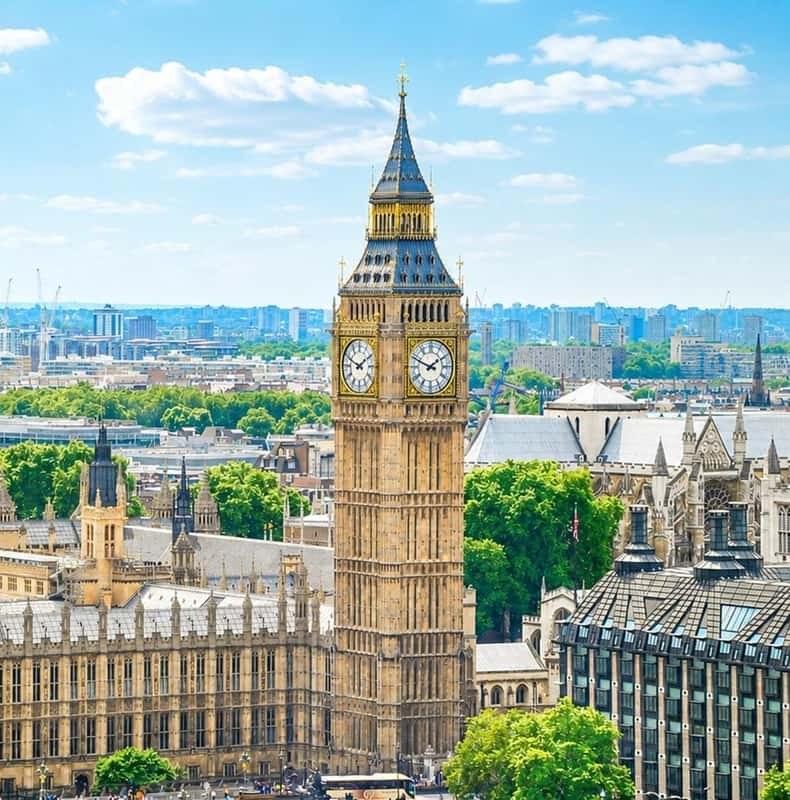
Westminster Hall, the Oldest Room in Parliament
Nine hundred years old, seventy-three metres long, and the first room on every route through the building. If you only remember one space from a visit, it will be this one.
Built in 1097, and still standing
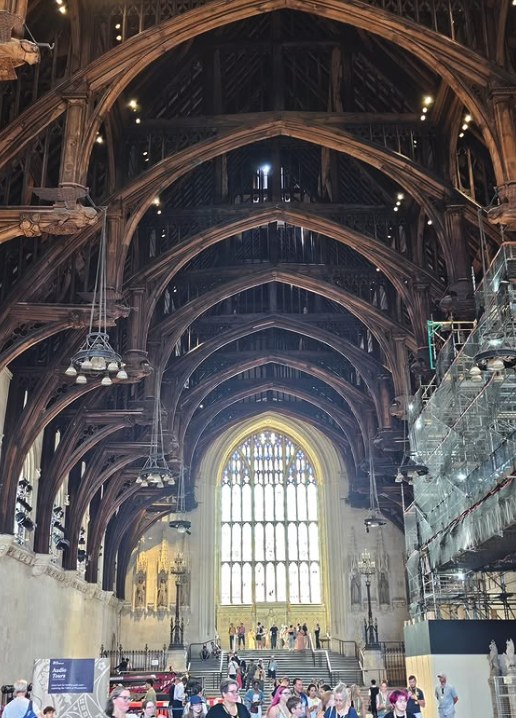
William II — William Rufus, son of the Conqueror — began the hall in 1097 and it was finished two years later. At 73 by 20 metres it covered about 1,547 square metres, which made it by far the largest hall in England and probably in Europe. The floor is close to four cricket pitches laid end to end.
The hammerbeam roof, 1393 to 1402
The roof you stand under is not William's. Richard II commissioned the present one at the end of the fourteenth century, and it took a decade to build. The king's carpenter Hugh Herland designed it and the master mason Henry Yevele strengthened the walls with buttresses to carry it. Great oak beams project from the walls, wooden arches spring from their tips and meet in a span of about eighteen metres, and the whole weight is carried without a single column on the floor.
Why a room with no pillars mattered
Because it made the hall usable. A medieval hall of that width would normally need two rows of posts down the middle, breaking it into aisles. Herland's solution left the floor clear, which is what allowed coronation banquets, courts of law and eventually lyings-in-state to happen in a single uninterrupted space. It is a piece of engineering that still reads as ambitious.
The trials held here
For centuries this was the setting for the state trials, partly because it was the one room large enough to hold a crowd. Sir Thomas More was tried here in 1535 and Anne Boleyn in 1536. Guy Fawkes and his fellow conspirators followed in 1606, and Charles I in 1649 — the only English king tried by his own subjects.
| Year | Trial | Outcome |
|---|---|---|
| 1535 | Sir Thomas More | Convicted of treason |
| 1536 | Anne Boleyn | Convicted of treason |
| 1606 | Guy Fawkes and the Gunpowder plotters | Convicted of treason |
| 1649 | Charles I | Convicted; the only English king tried by his subjects |
| 1788–1795 | Warren Hastings | Acquitted; the longest trial in British history |
The Hastings impeachment ran for seven years, though the court sat on only 142 days. The law courts left the hall in 1882 for the Royal Courts of Justice in the Strand.
What replaced the courts
When the judges moved out in 1882 the hall lost its daily use, and within sixteen years it had found a new one. The first lying-in-state held here was for the prime minister William Ewart Gladstone in 1898, and the practice has continued since. The coffin rests on a raised platform in the middle of the floor, guarded at each corner around the clock, and the public files past.
The roof and the Blitz
On the night of 10–11 May 1941 incendiary bombs hit the Palace. The Commons chamber was destroyed and the roof of Westminster Hall caught fire. Firefighters were given a choice about where to concentrate and the hall was saved. That decision is the reason the fourteenth-century oak above your head is still there.
What to look at while you are standing in it
Look up first, at the carved angels on the ends of the hammerbeams, each holding a shield. Then look down: brass plaques set into the floor mark where the trials took place and where monarchs and statesmen have lain. The great window at the south end is above the steps you will climb to leave, and the light through it is what most visitors photograph.
The one room where photographs are allowed
Along with St Stephen's Hall and New Palace Yard, this is where cameras come out. It is also where a live guide will do most of their talking, because there is room to gather a group and the acoustics are better than anywhere else on the route. If you have questions, ask them here.
Seeing it without booking a tour
On a sitting day the public route up to the galleries passes through the hall, and that costs nothing. You will not linger, but you will have stood in it. On tour days every route starts here, so any visit you book includes it.
Which visits give you the most time in it
The guided trips spend twelve to fifteen minutes here because the guide has a lot to say. The timed entry ticket lets you stay as long as you like, which for this room is the better answer if you care about the architecture. Both are compared on compare Parliament tours side by side, and the full route puts the hall in sequence with everything after it.
For entrance and security detail, see visitor information from London Parliament Tours. The fire that spared this hall and destroyed everything around it is covered on the history of the Palace, and when Parliament sits lists the dates a weekday visit is possible.
Visits that start in this hall
Every route through the building opens here. These three differ in how long they let you stay and whether somebody is talking while you look up.