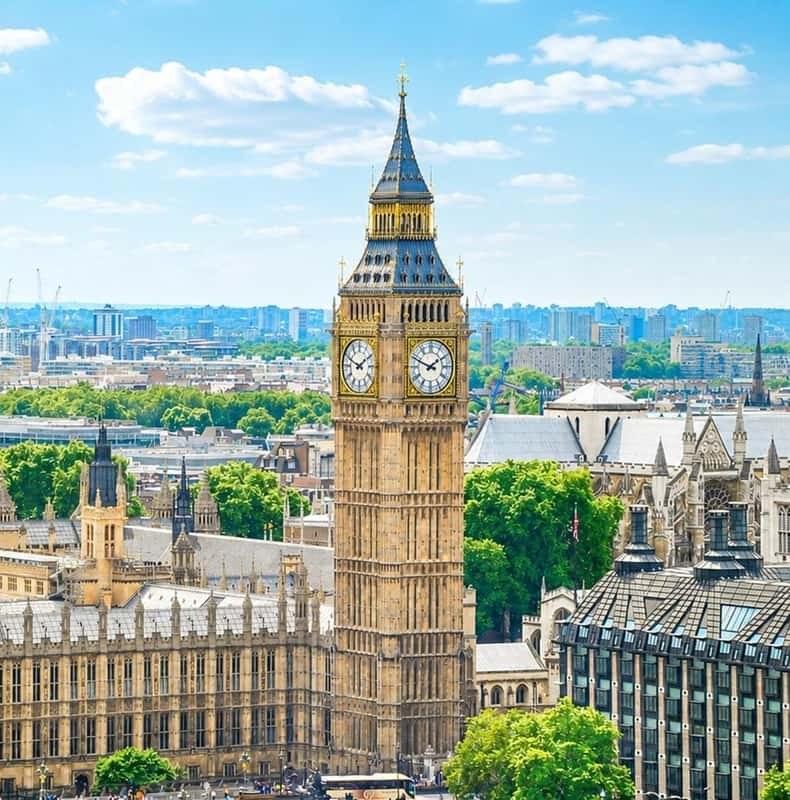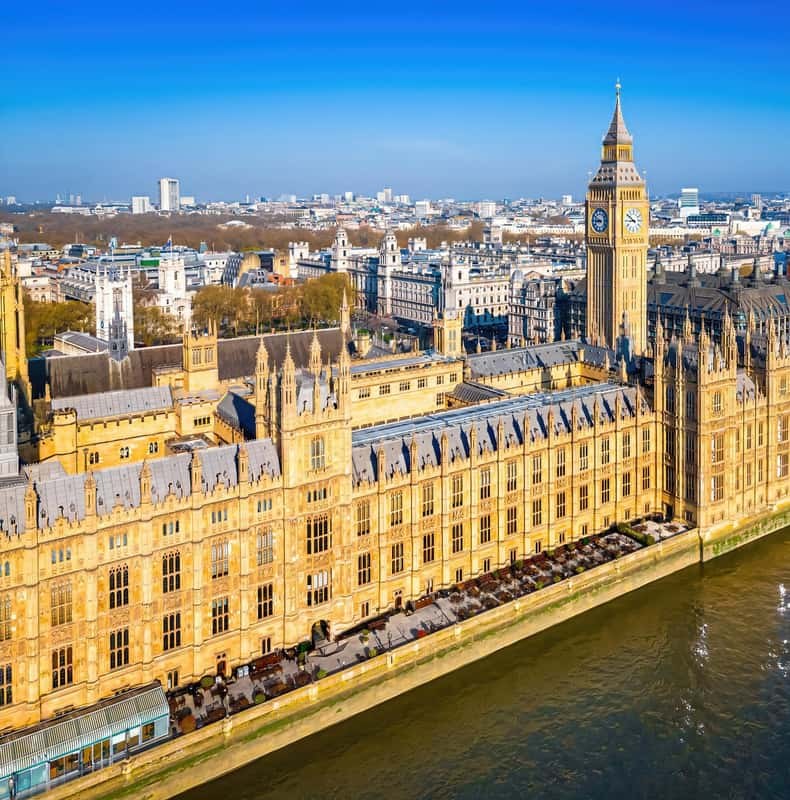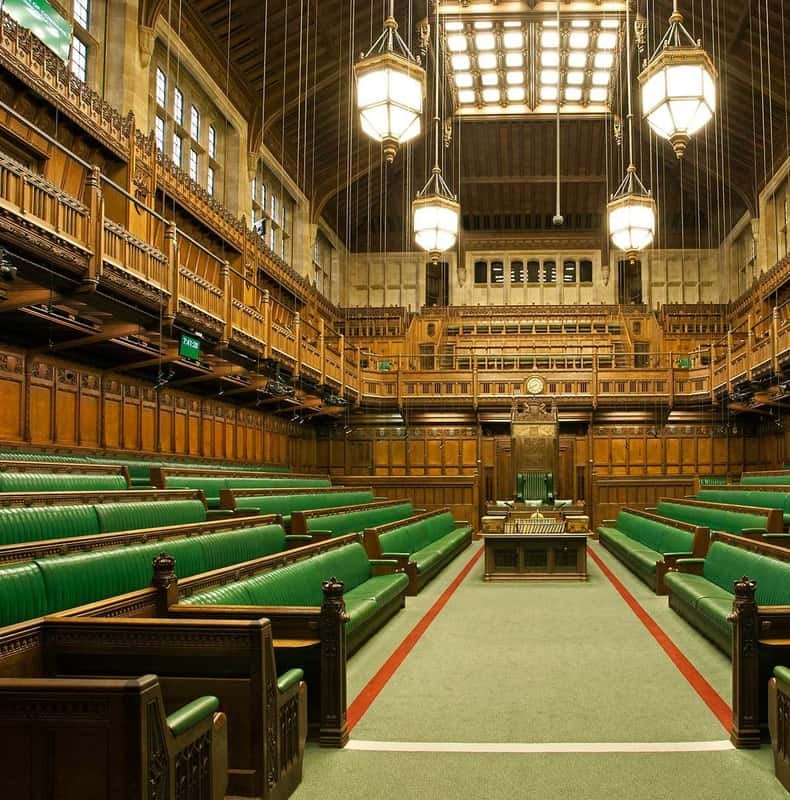
The House of Lords, Parliament's Upper Chamber
Red leather, gilded canopy and a throne nobody sits in more than once a year. It is the most decorated room in the building and the one visitors photograph in their heads.
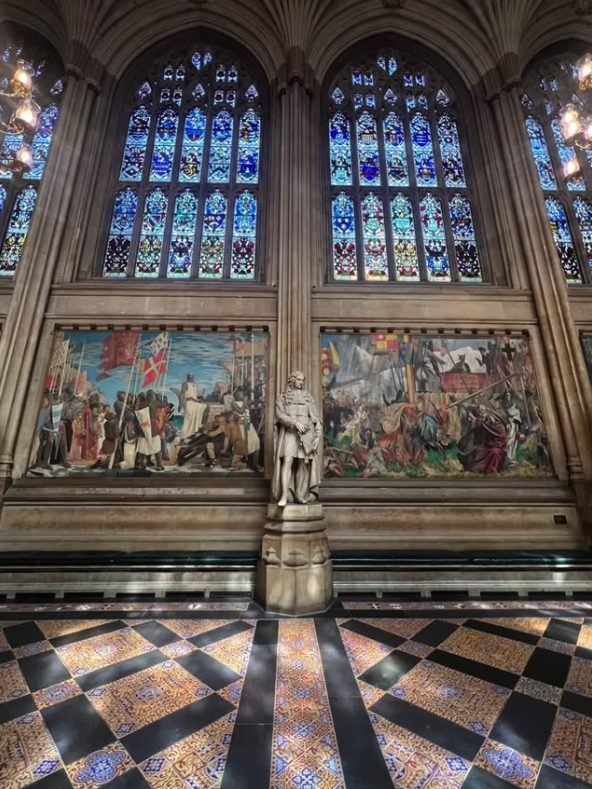
Pugin's room, and how it was made
A.W.N. Pugin was brought in as Charles Barry's designer in 1844 and given the interiors of the new Palace. He produced carved panelling, wallpapers, painted and gilded ceilings, encaustic floor tiles and a vast range of furniture — including the Sovereign's Throne that dominates this chamber. Nothing else he designed survives at this intensity, and the room is the reason his name is still attached to the building.
The Throne, the Woolsack and the canopy
The Sovereign's Throne stands at the south end under a gilded canopy, and the monarch uses it once a year at the State Opening. In front of it sits the Woolsack, a large cushion stuffed with wool from around the Commonwealth, on which the Lord Speaker sits. The wool is not decorative: it is a fourteenth-century reminder of where England's wealth came from.
Why the Commons met in this room for nine years
After the bombing of 10–11 May 1941 the Commons had nowhere to sit, so from late June 1941 until October 1950 they used this chamber and the Lords moved into the Robing Room next door. For nine years the green benches of the lower house sat in the red room, which is a detail guides enjoy pointing out.
What happens here in a normal week
| Occasion | How often | What you would see |
|---|---|---|
| State Opening of Parliament | Once per session | The King on the Throne, both Houses present |
| Legislation and debate | Most sitting days | Peers on the red benches, the Lord Speaker on the Woolsack |
| Question time | Start of each sitting day | Thirty minutes of oral questions to ministers |
| Committee work | Weekdays | Off the chamber, in rooms not on the tour route |
| Public gallery | Sitting days | Free entry to watch from above, no ticket needed |
The chamber sits on the standard tour route and is closed to visitors while the House is actually sitting, which is why tours run on Saturdays and in recess.
Reading the room while you stand in it
Look at the ceiling first: painted and gilded panels, and no two identical. Then the glass, the bench colour, and the two thrones side by side for the monarch and consort. The chamber is smaller than photographs suggest. Cameras stay away here, so look properly.
Anyone can also watch a Lords debate from the public gallery when the House is sitting, without a ticket and without charge. It is quieter than the Commons and much easier to get into, which makes it the better choice if you want to see the room in use. The dates that allows are on when Parliament sits.
Getting inside on a tour
The Lords chamber is on every route that goes through the door, and on the standard order you reach it just before the Commons. A guided visit will explain the ceremony and the seating; the handset will describe the decoration. Compare the ways in on London Parliament guided tours, or read the full route for what comes before and after this room.
For the entrance and the security queue, London Parliament Tours covers it on visitor information, and Pugin's work here is part of the wider story on the history of the Palace.
Visits that reach the red benches
Three ways onto the floor of the Lords: two with a live guide, one on a timed ticket with a handset in nine languages.