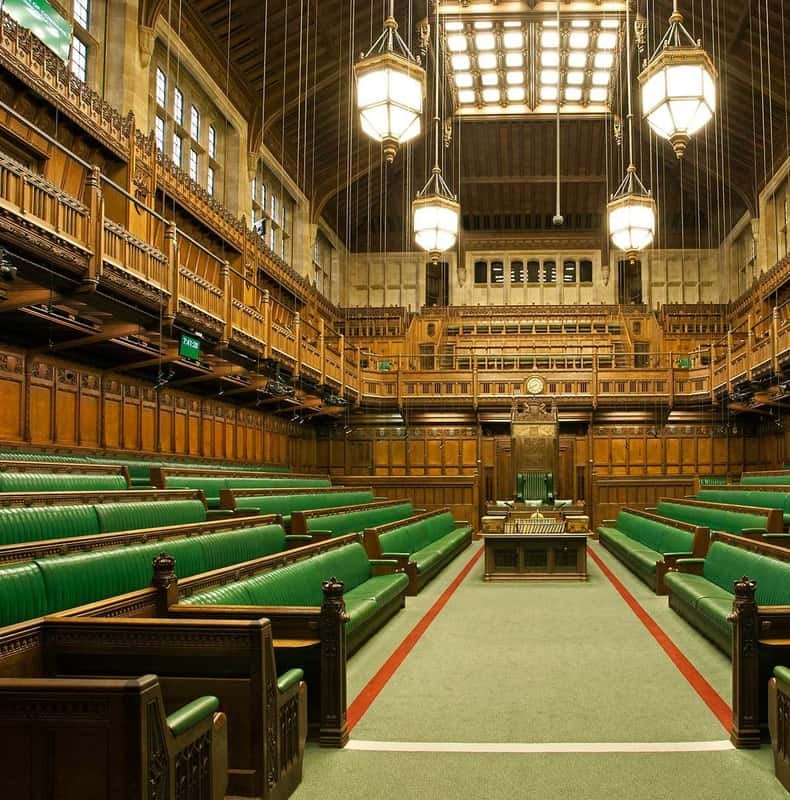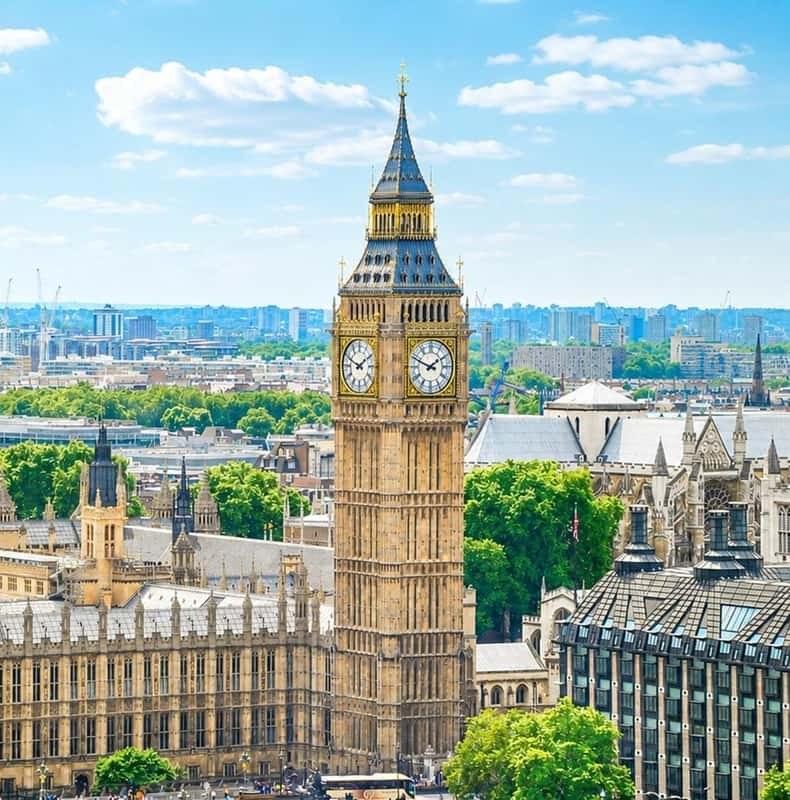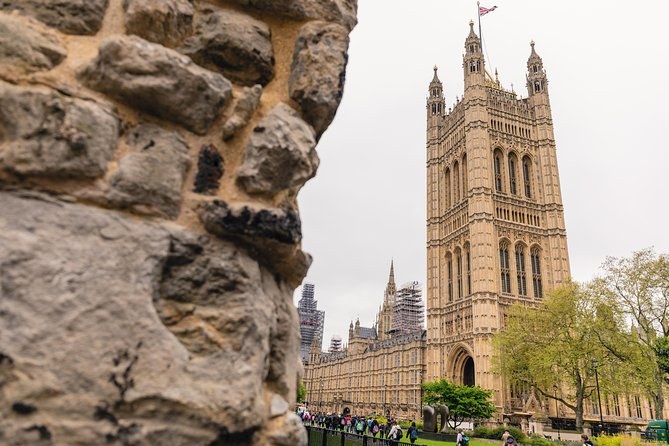
The House of Commons, Parliament's Debating Chamber
The room everyone recognises from television, smaller in person than anybody expects, and only seventy-six years old. The one before it was destroyed in a single night.
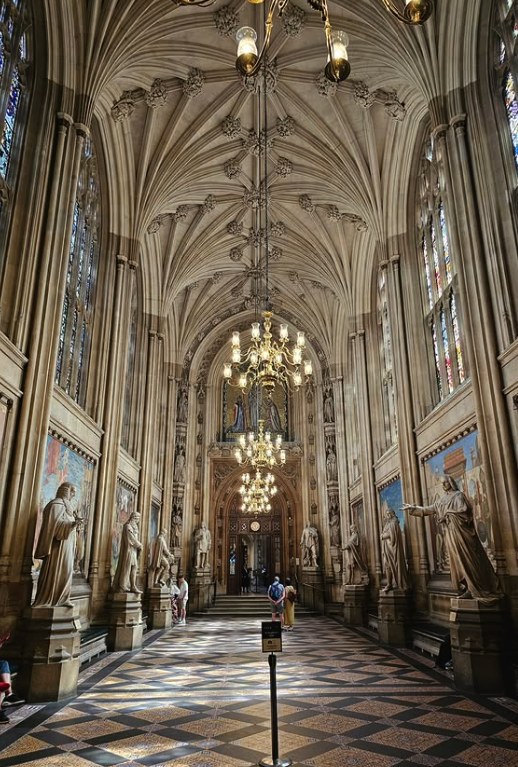
Bombed on 10 May 1941, reopened on 26 October 1950
Incendiary bombs on the night of 10–11 May 1941 did the greatest damage the Palace suffered in the war, and the Commons chamber was destroyed outright. From late June 1941 until October 1950 the Commons met in the Lords chamber while the Lords moved into the Robing Room. Sir Giles Gilbert Scott designed the replacement, and King George VI and Queen Elizabeth opened it on 26 October 1950.
Why it was rebuilt small on purpose
The chamber seats fewer members than there are members, and that was a deliberate choice. Churchill argued for rebuilding it to the old dimensions precisely because a chamber that cannot hold everyone produces a different kind of debate: urgent when it is full, conversational when it is not. Standing in it, the thing you notice is how close the two sides are.
The green benches, and what the two red lines are for
Green has marked the Commons since at least the seventeenth century and was carried over when Barry and Pugin rebuilt the Palace after 1834; red has always belonged to the upper house. Two red lines run along the floor in front of the benches on either side, two sword lengths apart, and members are not supposed to cross them while speaking. The swords are long gone and the convention is not.
What to look for from the gallery
| Feature | Where it is | Why it matters |
|---|---|---|
| The Speaker's Chair | North end, facing down the chamber | The Speaker calls each member; nobody speaks without being called |
| The despatch boxes | Either side of the table, in the middle | Where the Prime Minister and the Leader of the Opposition stand |
| The Table of the House | Between the two front benches | Carries the mace when the House is sitting |
| The two red lines | On the floor in front of the front benches | Two sword lengths apart; not to be crossed in debate |
| The division lobbies | Behind the benches on both sides | Members vote by walking through one or the other |
| The press and public galleries | Above, at both ends | Where you sit if you come to watch a debate |
The chamber is on every tour route through the building, and open to the public from the gallery on sitting days.
Where the Commons sat while this room was rebuilt
From late June 1941 until October 1950 the Commons met in the Lords chamber, and the Lords moved into the Robing Room. For nine years the lower house sat on red benches in the upper house's room. Guides point it out because it is the sort of improvisation the building is full of, and because the two chambers are ninety seconds apart on the tour route.
Watching a debate for nothing
The public gallery is free to everyone, UK resident or not, whenever the House is sitting — Monday to Thursday and on sitting Fridays. You queue, you go through the same security as a tour, and you sit above the chamber for as long as you like. No ticket is needed and no booking is taken.
Prime Minister's Questions on a Wednesday
The busiest half hour of the parliamentary week, and the one time the gallery fills. Tickets go to UK residents through their own MP or a member of the Lords, and everyone else queues for whatever space is left once ticket holders are seated. If you want the room rather than the argument, come on a Tuesday and walk in. The sitting pattern is on when Parliament sits.
Why you cannot see it every day of the year
Because it is a workplace. Tours run on Saturdays all year and Monday to Saturday in recess, which is when the room is empty. That is also why the tour calendar moves each year, and the 2026 windows are set out on when Parliament sits.
How to get into the chamber on a tour
Every visit that goes inside the building includes it, whether you take a live guide or a handset. The difference is what you get told while you are standing there. If you want the conventions explained, take a guided trip; if you would rather look at the room in your own time, take the entry ticket. Parliament building London tour sets the options side by side, and the House of Lords is the room you reach immediately before it on the standard route.
Before you travel, visitor information covers the Cromwell Green entrance and the security queue, and the history of the Palace explains why a Victorian building contains a medieval hall.
Visits that go into this chamber
All three take you onto the floor of the Commons; two put a live guide beside you while you are there.