
Timing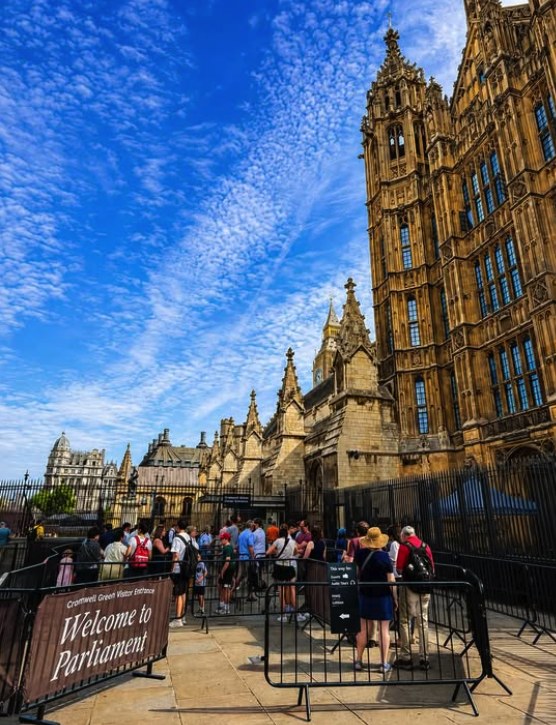
When to Visit the Houses of Parliament
In this guide
- The rule that governs everything
- When is Parliament in recess in 2026?
- Month by month
- Which month is best?
- Does the day of the week matter?
- What is the best time of day?
- What can you do on a sitting day?
- What closes the building entirely?
- How far ahead should you book?
- Does the weather matter?
- What is a recess, exactly?
- Where the dates are published
- Planning around the State Opening
- School holidays and family visits
- The year at a glance
- When the building photographs best
- When is it busiest?
- Weekday or weekend, if you have the choice
- Turning that into a booking
The rule that governs everything
This building's opening hours are a function of its work. Tours run on Saturdays throughout the year. On weekdays they run only when the House of Commons is in recess and the chambers are empty. There are no Sunday tours.
That single sentence explains almost every disappointed visitor in Westminster. If your only free day is a Tuesday in June, the Palace is closed to tours — but the public gallery is open, and that is a different and equally good visit.
When is Parliament in recess in 2026?
| Recess | From | To | Weekday tours |
|---|---|---|---|
| February | 13 February 2026 | 22 February 2026 | About one week |
| Easter | 27 March 2026 | 12 April 2026 | Just over two weeks |
| Whitsun | 22 May 2026 | 31 May 2026 | About one week |
| Summer | 17 July 2026 | 31 August 2026 | Six full weeks |
| Conference | 16 September 2026 | 11 October 2026 | Nearly four weeks |
| Christmas | 18 December 2026 | 3 January 2027 | Just over two weeks |
House of Commons recess dates as published by Parliament, read in August 2026. Dates occasionally shift when the parliamentary timetable changes.
Month by month
January. Saturdays only after the third. Cold, quiet, and the shortest queues of the year.
February. A short recess mid-month opens up weekday slots. Otherwise Saturdays.
March. Saturdays until the Easter recess starts on the 27th.
April. The Easter recess runs to the 12th, so the first half of the month has weekday tours and the second half does not.
May. Saturdays, plus the Whitsun week at the end. Long light in the evenings for photographs.
June. Saturdays only, and the busiest Saturdays of the year so far. Book early.
July. Everything changes on the 17th when the summer recess begins. After that, weekdays.
August. The best month for a weekday visit: six weeks of Monday to Saturday tours, and London's residents are away.
September. Weekdays return from the 16th with the conference recess.
October. The conference recess runs to the 11th, then Saturdays only.
November. Saturdays. Low sun on the river front in the late afternoon.
December. Saturdays until the 18th, then a run of weekday slots over Christmas.
Which month is best?
August, comfortably. Six full weeks of weekday tours, long daylight, and a city with a good proportion of its residents elsewhere. The only cost is that every other visitor knows this too, so book ahead.
If you would rather have the building to yourself, take a January or February Saturday. It is cold outside and warm in, the queue is short, and the light through the great window of Westminster Hall in low winter sun is the best it gets.
Does the day of the week matter?
Yes, for the queue rather than the tour. Security waits average up to thirty minutes and rise to around forty-five on Monday, Tuesday and Wednesday afternoons, which are the busiest windows in the week. Thursday and Friday afternoons in recess are noticeably calmer.
Saturdays are busy throughout, and the morning slots go first. If you are visiting on a Saturday, take the earliest time you can get.
What is the best time of day?
First thing. The queue is shortest, the light in Westminster Hall is best in the morning, and you leave with the rest of the day intact for Westminster Abbey or the Churchill War Rooms.
If you are photographing the outside rather than touring the inside, the reverse is true: the river front faces east and takes the morning sun, while Parliament Square works better late in the afternoon when the tower catches the last of it.
What can you do on a sitting day?
Watch. Both public galleries are free and open to anyone whenever that House is sitting, Monday to Thursday and on sitting Fridays. You go through the same security, sit above the chamber, and stay as long as you like.
Prime Minister's Questions on a Wednesday is the busiest half hour of the week and needs a ticket from an MP or a peer if you are a UK resident. Any other sitting day, you queue and walk up. Visiting Parliament for free has the detail.
What closes the building entirely?
The State Opening of Parliament, along with the preparations around it. Its date moves from session to session, so if your trip falls in the weeks when a new session might begin, check before booking.
Tours can also be withdrawn at short notice when the Palace is needed for parliamentary business, and Westminster Abbey closes for royal and state events. Most listed trips refund in full up to twenty-four hours before, which is the protection that matters here.
How far ahead should you book?
Further than you would think. Saturday slots and every recess week sell out, and the free MP tours can be requested up to three months ahead precisely because they fill. For August, think in terms of weeks rather than days.
The Elizabeth Tower is the extreme case: released in batches, sold only by Parliament, and gone almost immediately. Book that first and build the rest around it.
Does the weather matter?
Barely, once you are inside. This is a stone building and the tour route is indoors from the moment you clear security. The one place it matters is the queue, which is outdoors and in full sun on a summer afternoon or in the rain in November.
Dress for the queue rather than the tour, and take a layer either way: the halls hold their temperature and are cool even in August.
What is a recess, exactly?
A period when the House is adjourned and members are not sitting. They are not holidays in the ordinary sense — most MPs spend them working in their constituencies — but for a visitor the effect is straightforward: the chambers are empty, so they can be shown to the public.
There are six in a typical year, tied loosely to February half term, Easter, Whitsun, the summer, the party conference season and Christmas. The exact dates are set by the Commons itself and published in advance, and they occasionally move when the parliamentary timetable changes.
The two Houses do not always rise and return on the same days, so a date that is recess for the Commons may not be for the Lords. For tours, the Commons calendar is the one that governs.
Where the dates are published
Parliament publishes its own recess dates and its non-sitting periods, and those pages are the authority. Tour availability itself is shown on Parliament's ticketing site, which will simply not offer you a date it cannot run.
The practical method is to check availability first and the calendar second. If the ticket site offers you a Tuesday, that Tuesday is inside a recess window, and you do not need to work out which one. The calendar matters most when you are planning months ahead and the dates are not loaded yet.
Planning around the State Opening
The State Opening of Parliament closes the building to visitors, and so do the preparations around it. It marks the start of a new parliamentary session, its date moves from session to session, and it is announced rather than fixed to a calendar slot.
If your trip falls in a period when a new session might begin, check before you book anything non-refundable. On the day itself the compensation is that the ceremonial arrival is visible from the streets around Westminster, which is free and is a genuinely remarkable thing to watch.
School holidays and family visits
The summer recess and most school holidays overlap, which is convenient and crowded in equal measure. February half term falls inside the February recess in 2026, and the Christmas recess covers the school break.
Easter is the awkward one: the recess runs from 27 March to 12 April 2026, so the second half of the Easter holidays has Saturdays only. If you are travelling with children and need a weekday, aim for the first half of April rather than the second.
Family pricing helps: Parliament's audio tour admits one child free with every full-paying adult, and there is a version of the commentary recorded for children.
The year at a glance
- Widest window: 17 July to 31 August 2026, six weeks of weekday tours.
- Quietest: January and February Saturdays.
- Busiest: June Saturdays and the whole of August.
- Best light inside: winter mornings, through the great south window.
- Only free on a sitting day: the public galleries, Monday to Thursday.
- Never open: Sundays.
When the building photographs best
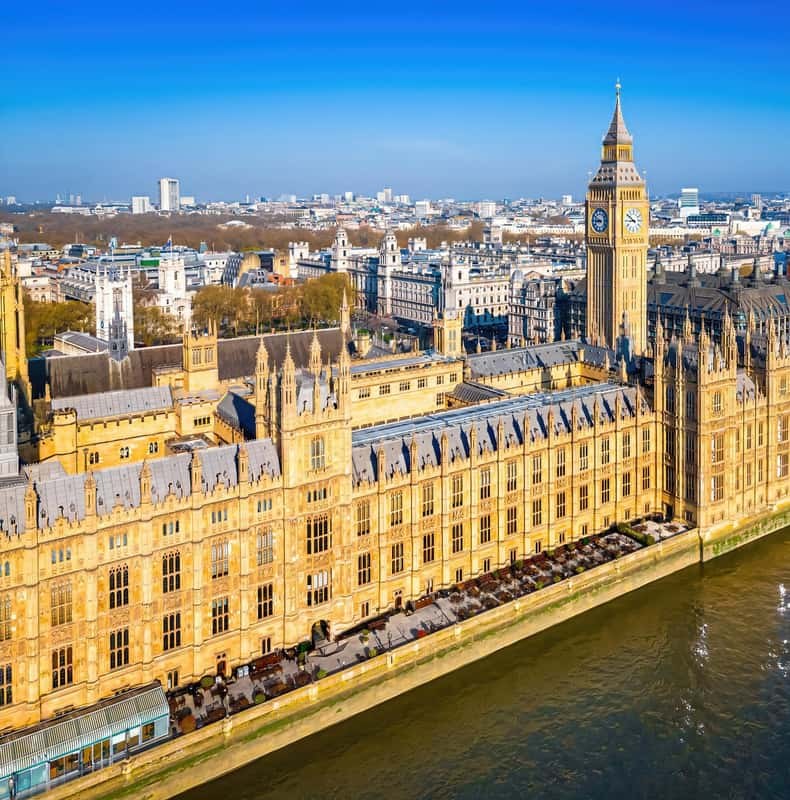
The river front faces east, so it takes the morning sun and is at its best from the South Bank before about ten. Parliament Square works better late in the afternoon, when the west face of the Elizabeth Tower catches the last of the light and the stone goes gold.
Winter gives you both at civilised hours: sunrise after eight and sunset before four means you can photograph the river front after breakfast and the square before dinner. In June you would need to be out at five in the morning for the same frame.
Inside, the great south window of Westminster Hall is the shot, and it is best in the morning. That is also when the hall is quietest, which is not a coincidence — the tour groups arrive later.
When is it busiest?
August, June Saturdays, and the middle of any school holiday. The summer recess opens six weeks of weekday tours at exactly the point when most visitors are in London, so the slots that look plentiful in July are gone by the time many people book.
The quietest windows are the January and February Saturdays, and weekday mornings in the February and Whitsun recesses, which are short enough that fewer people plan around them. Late afternoon slots on a Thursday or Friday in recess are the calmest of all, at the cost of the best light.
Security waits track the same pattern, running longest on Monday to Wednesday afternoons.
Weekday or weekend, if you have the choice
Weekday, whenever a recess makes it possible. Saturdays are the only day the Palace opens outside recess, which makes them the busiest tour day of the week by a distance, and the morning slots go first. A Thursday or Friday inside a recess window is a noticeably calmer version of exactly the same visit.
There is one argument the other way. If you want to combine the Palace with a debate in the public gallery, you need a sitting day, and sitting days and tour days are mutually exclusive. In that case take two trips into Westminster rather than trying to do both in one.
Whichever you choose, the earliest slot of the day is the better one: the security queue is shortest, the light in the halls is best, and you leave with the afternoon intact.
Turning that into a booking
Work out whether your dates fall in a recess window. If they do, you have weekday choice and should take a Thursday or Friday morning. If they do not, you are booking a Saturday, and the earlier slot is the better one.
Then pick the trip. London Houses of Parliament tour tickets sets them side by side on hours inside, guide and fare, and when Parliament sits keeps the dated calendar.
Tours that fit this guide
Picked for what this guide covers, not for what sells.