Facts About the Houses of Parliament
The building is bigger than it looks
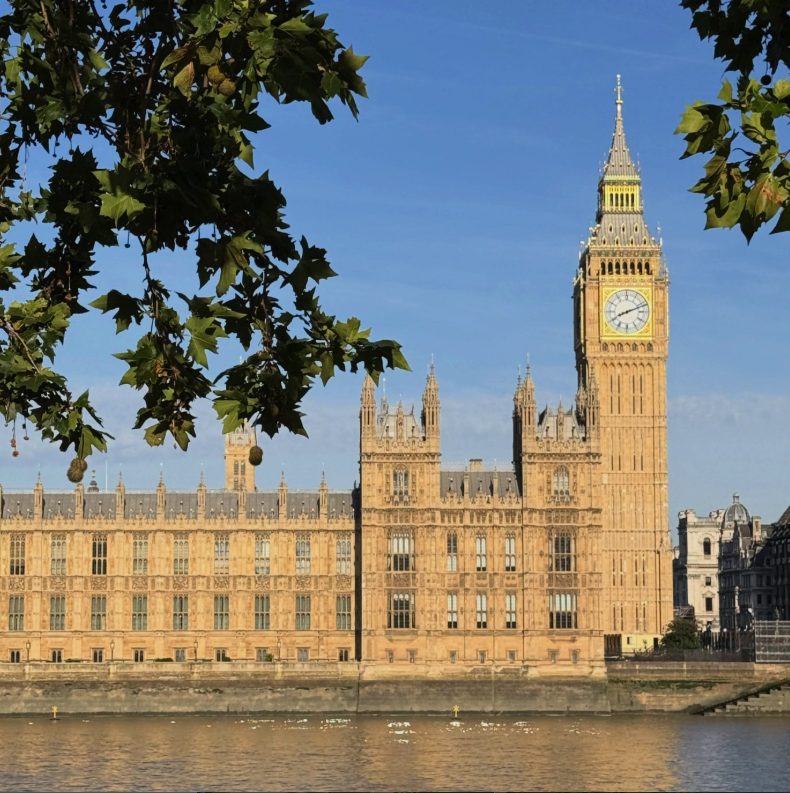
From the far bank of the Thames the Palace of Westminster reads as one long facade. Inside it holds around 1,100 rooms, 100 staircases and 4.8 kilometres of passageways. The tour route covers perhaps fifteen of those rooms, which is why guides talk about the parts you will never see almost as much as the parts you will.
A fire started by accountancy
The Exchequer kept its records on wooden tally sticks, notched and split so that each party held half. When the system was abandoned, two cartloads of obsolete sticks were burned in the furnaces beneath the House of Lords on 16 October 1834. The flues overheated, and by morning almost the entire Palace had gone.
What survived: Westminster Hall, the Undercroft Chapel, the cloisters and chapter house of St Stephen's, and the Jewel Tower. Charles Barry won the competition to rebuild, and designed the new Palace around what was left.
The numbers worth knowing
| Fact | Figure | Note |
|---|---|---|
| Rooms | about 1,100 | Plus 100 staircases and 4.8 km of passageways |
| Westminster Hall | 73 by 20 metres | About 1,547 square metres of floor |
| Hammerbeam roof span | about 18 metres | No columns; built 1393–1402 |
| Victoria Tower | 98.5 metres | The taller of the two towers |
| Elizabeth Tower | 96 metres | 334 steps, no lift |
| Opal glass per clock dial | 324 panes | Dial frames designed by Pugin |
| UNESCO inscription | 1987 | With Westminster Abbey and St Margaret's Church |
Figures published by UK Parliament's heritage collections, checked August 2026.
The tower everyone names wrongly
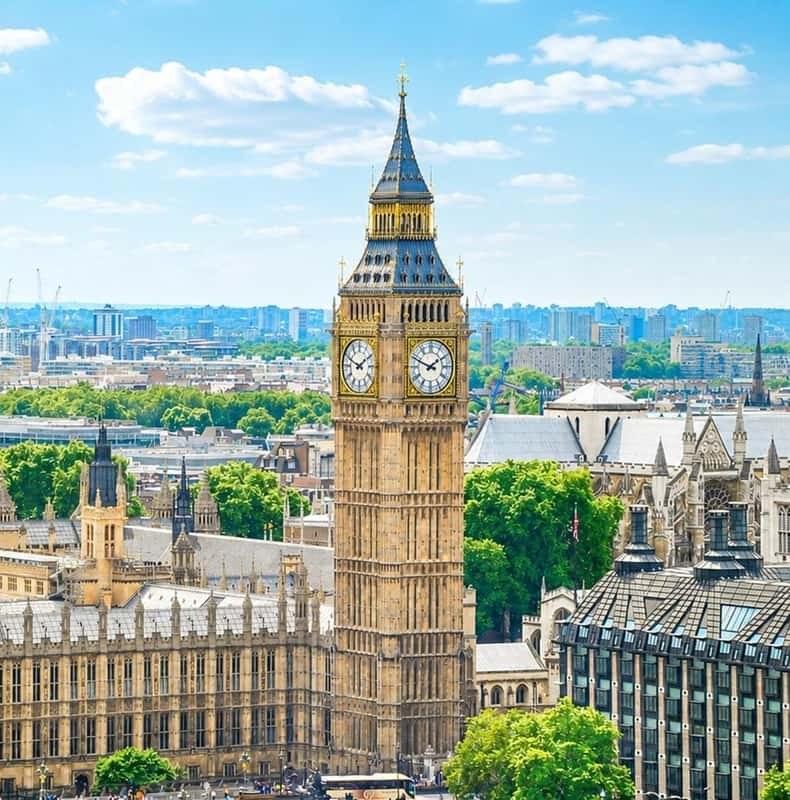
Big Ben is the bell. The tower was the Clock Tower until 2012, when it was renamed the Elizabeth Tower for the Diamond Jubilee. The Great Clock started on 31 May 1859 and the Great Bell was first heard on 11 July of the same year. When it was built it was the largest and most accurate clock in the world, and it is still the biggest striking and chiming turret clock in the United Kingdom.
Here is the fact that catches people: the Victoria Tower at the southern end is the taller of the two, at 98.5 metres against 96. For years it was the tallest square stone tower in the world. Almost nobody names it, because the clock takes the eye. Big Ben and the Elizabeth Tower has the rest.
Nine years in the wrong chamber
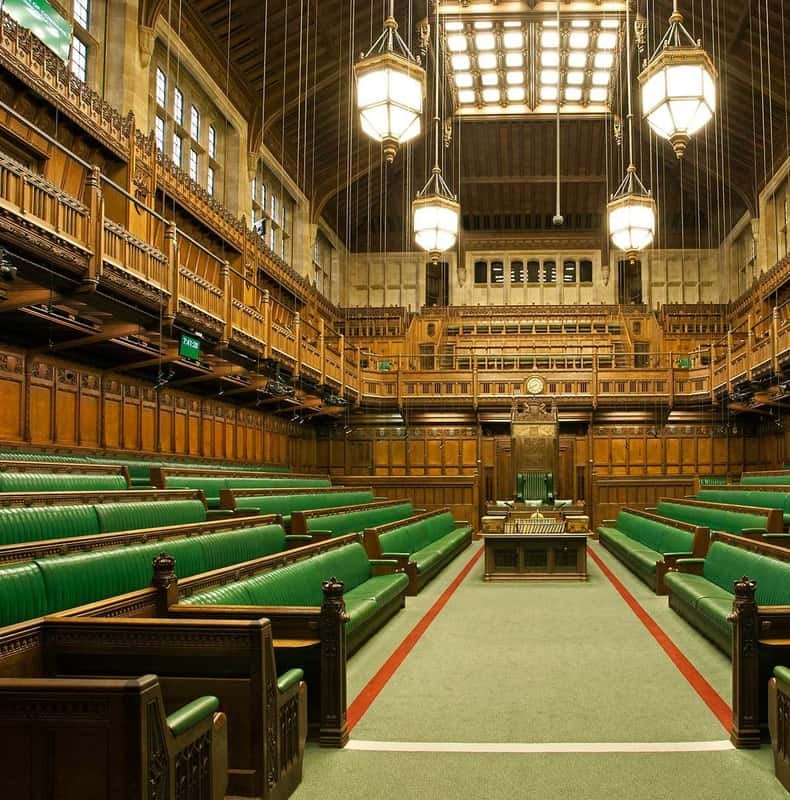
Incendiary bombs on the night of 10 and 11 May 1941 destroyed the Commons chamber and set the roof of Westminster Hall alight. Firefighters had to choose where to concentrate, and the hall was saved. From late June 1941 until October 1950 the Commons met in the Lords chamber and the Lords moved into the Robing Room.
The replacement chamber, designed by Giles Gilbert Scott, was opened by King George VI and Queen Elizabeth on 26 October 1950. It seats fewer members than there are members, and that was deliberate: a chamber that cannot hold everyone produces a different kind of debate.
What the fire of 1834 left standing
Four things survived the night, and you can still see three of them. Westminster Hall, which is the first room on every tour route. The Undercroft Chapel, beneath St Stephen's. The cloisters and chapter house of St Stephen's. And the Jewel Tower, which stands on its own across the road from the Victoria Tower and is easy to walk past without noticing.
Everything else you look at is Victorian. That is worth holding in mind while you walk: you are in a nineteenth-century building wrapped around an eleventh-century room, and the join is visible if you know where to look for it.
A clock that was the best in the world
When the Great Clock started on 31 May 1859 it was the largest and most accurate clock anywhere, and it remains the biggest striking and chiming turret clock in the United Kingdom. The Great Bell was first heard six weeks later, on 11 July. The four dials were designed by Augustus Pugin while he was working on the interiors, each built from six pieces bolted together and glazed with 324 separate panes of opal glass.
Details you can see on the tour
- The carved angels on the ends of the hammerbeams in Westminster Hall, each holding a shield.
- The brass plaques in the floor of the same hall, marking where the trials happened and where monarchs have lain in state.
- The two red lines in the House of Commons, two sword lengths apart.
- The Woolsack in the House of Lords, stuffed with wool from around the Commonwealth as a reminder of where English wealth began.
- The fan vault over Central Lobby, and the four doorways beneath it.
The trials that happened where you are standing
Westminster Hall was the setting for the state trials because it was the one room big enough to hold a crowd. Sir Thomas More in 1535, Anne Boleyn in 1536, Guy Fawkes and the Gunpowder plotters in 1606, Charles I in 1649. The longest was the impeachment of Warren Hastings, which ran from 1788 to 1795 — seven years, though the court sat on only 142 days.
Five years inside scaffolding
Between 2017 and 2022 the Elizabeth Tower underwent the largest conservation project in its history, from the gilt cross and orb at the tip to the foot of the 334-step staircase. The clock mechanism was removed and rebuilt, the ironwork repaired, the dials re-glazed and the original colour scheme restored. What you photograph today is closer to Pugin's intention than anything seen for a century.
All of it is still a workplace, which is the single fact that shapes a visit most. When Parliament sits explains what that does to the calendar, visitor information covers the entrance and the queue, the gallery has the rooms you may photograph, the questions page handles the rest, and London Parliament Tours compares the ways in.
Tours that fit this trip
Chosen for what this post covers rather than for what sells.