Inside a Parliament Tour: the Route
Why every visit follows the same line
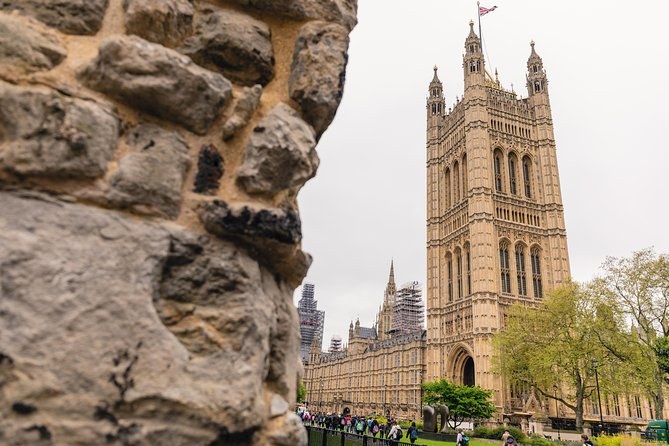
The order is set by the building rather than by the operator. You come in at the medieval end, walk up through the halls the Victorians added, and finish in the two chambers. The official audio tour, the official guided tour, the free tour a resident books through their MP and the guided trips sold by operators all trace the same line. What differs is how long you stand in each room and who is talking.
Stop by stop, with realistic timings
| Order | Room | Time | What to look for |
|---|---|---|---|
| 1 | Westminster Hall | 12–15 min | The hammerbeam roof and the brass floor plaques |
| 2 | St Stephen's Hall | 8–10 min | The Building of Britain murals and the statues |
| 3 | Central Lobby | 8–10 min | The fan vault and the four arched doorways |
| 4 | Members' Lobby | 5 min | The four bronze statues of former prime ministers |
| 5 | House of Commons | 15–20 min | Green benches, despatch boxes, two red lines |
| 6 | Peers' corridors | 8 min | Pugin's decoration at full intensity |
| 7 | House of Lords | 15–20 min | The Sovereign's Throne and the Woolsack |
| 8 | Robing Room and Royal Gallery | 10 min | The King's route on State Opening day |
Timings are what a comfortable visit takes, not a schedule. A live guide spends longer in the chambers; a handset lets you linger anywhere.
Stop one: the room that survived
Westminster Hall was begun in 1097 under William II and finished two years later. At 73 by 20 metres it was the largest hall in England and probably in Europe. The roof above you is not the original: Richard II commissioned it, Hugh Herland designed it, and it went up between 1393 and 1402, spanning about eighteen metres without a single column on the floor.
Stand still for a moment and look at the ends of the hammerbeams. Each carries a carved angel holding a shield. Then look down at the brass plaques set into the floor, which mark where the state trials were held and where monarchs have lain in state.
Stops two and three: the halls the Victorians built
St Stephen's Hall stands on the site of the chapel where the Commons met until the fire of 1834, and the statues along its walls are of parliamentarians. Look at the floor as well as the walls: the encaustic tiles are Pugin's, and the murals above them tell a nineteenth-century story about the making of Britain.
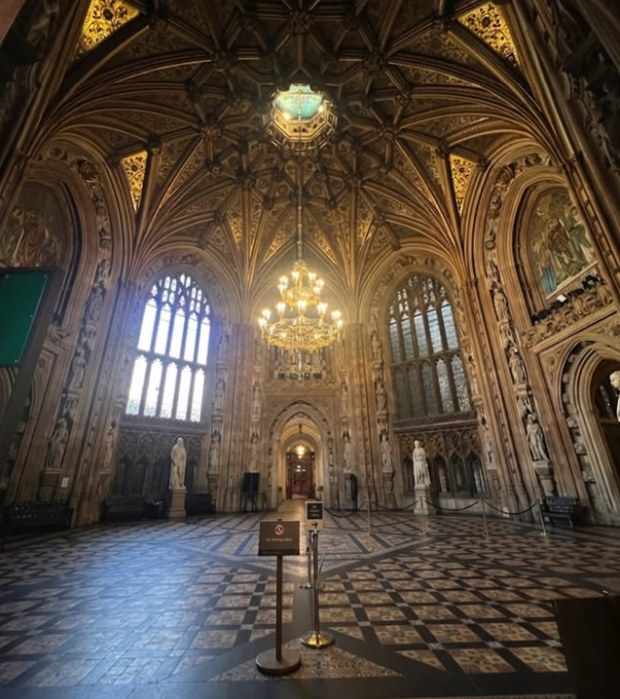
Central Lobby is the octagonal crossing at the heart of the building, under a fan vault, and it is where constituents wait to speak to their MP. That is where the word lobbying comes from. Four doorways lead off it, one towards each House, one to St Stephen's and one to the north.
Stops four and five: into the Commons
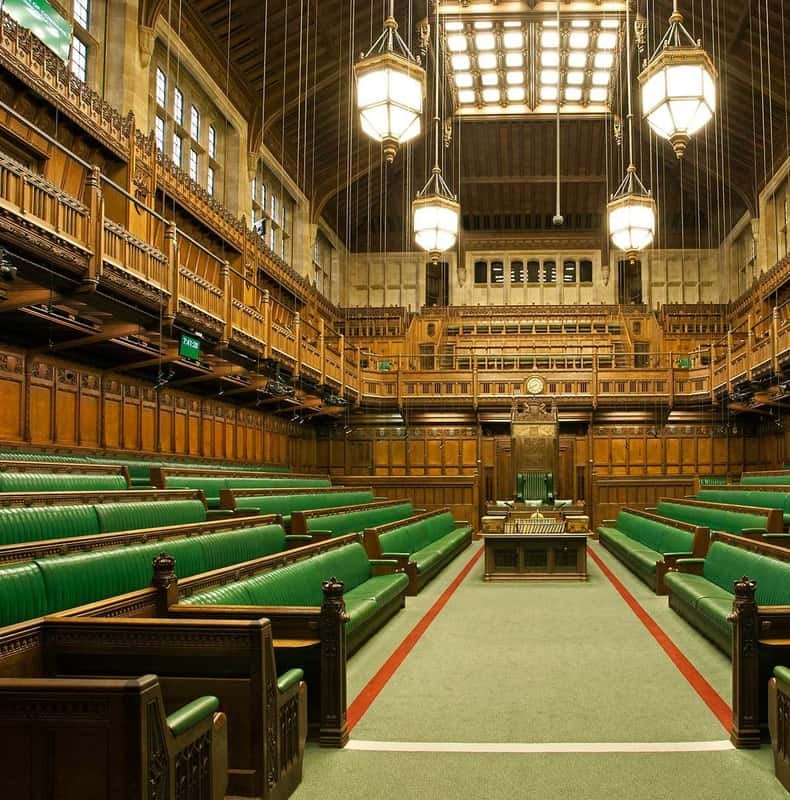
The Members' Lobby is the ante-room where MPs gather before going in, and the bronze statues there have had their feet rubbed shiny by passing hands. Beyond it is the House of Commons chamber, which is smaller than anybody expects. It was destroyed by bombing on 10 and 11 May 1941, rebuilt by Giles Gilbert Scott and reopened on 26 October 1950.
Three things to notice while you are standing in it:
- The two red lines on the floor, two sword lengths apart, which members are not supposed to cross while speaking.
- The despatch boxes on the table, where the Prime Minister and the Leader of the Opposition stand.
- The green of the benches, a colour that has marked the lower house since at least the seventeenth century.
Stops six and seven: through to the Lords
The corridors between the two Houses are the most concentrated Pugin in the building — carved panelling, painted ceilings, tiled floors. Then the House of Lords opens up in red and gold, with the Sovereign's Throne under its canopy at one end and the Woolsack in front of it. The King sits there once a year at the State Opening.
Stop eight, and the way out
The Robing Room and the Royal Gallery are the rooms the monarch passes through on State Opening day, and they finish the route. You leave the way you came, back down through Westminster Hall, which means you get a second look at the roof with the benefit of everything you have learned since the first.
Four ways along the same route, compared
Because everyone walks the same line, the choice is not about what you see. It is about who is talking, how fast you go and what you pay.
- Official audio tour, from £31. A handset in twelve languages plus British Sign Language, ninety minutes, one child free with every paying adult. You set the pace.
- Official guided tour, £34. An in-house guide for ninety minutes. The same rooms, with somebody answering questions in them.
- Free tour through your MP. About seventy-five minutes, led by the same in-house guides, and open to UK residents who can book three months ahead.
- A listed guided trip, from $75. Adds Westminster Abbey on the same booking and a guide who stays with you for both buildings.
The gap that matters is between a handset and a person. In the chambers a guide can answer the question you actually have — why the mace is on the table, what happens at a division — and a recording cannot. In Westminster Hall the reverse is true: the room rewards standing still, and a handset lets you.
Where the camera comes out, and where it goes away
Three places only: Westminster Hall, St Stephen's Hall and New Palace Yard. Central Lobby, both chambers and every corridor between them are camera-free. That restriction is why interior photographs of this building are rare, and why the ones you find online show the same two rooms over and over.
What the route leaves out
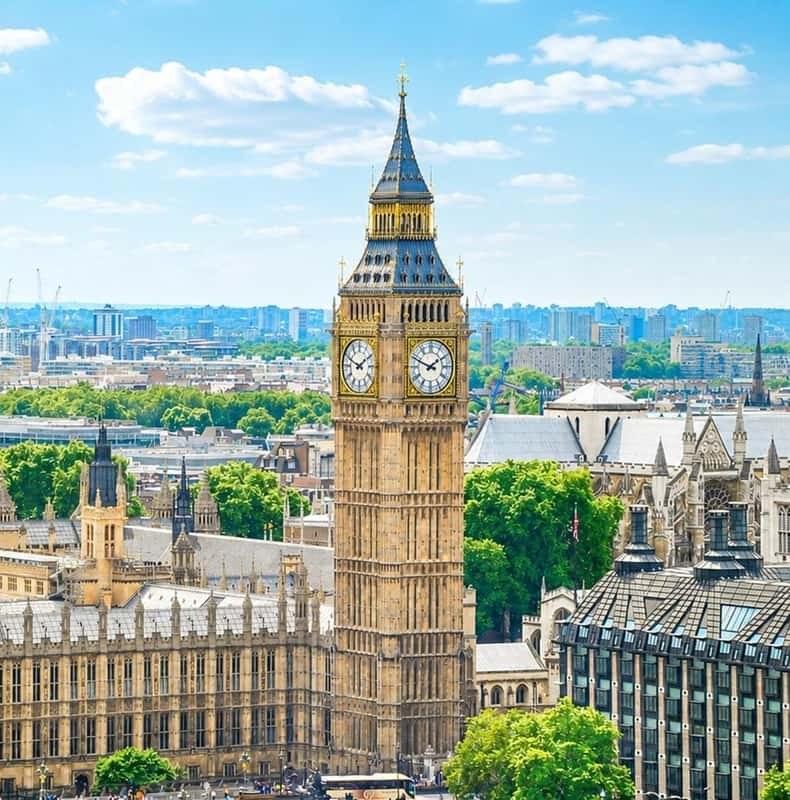
It does not include the Elizabeth Tower, which is a separate ticket and a 334-step climb. It does not include the offices, the committee rooms or the libraries, which are workplaces. And on a sitting day it does not include the chambers at all, because the members are using them — which is the whole reason the tour calendar follows the parliamentary one.
London Parliament Tours compares every bookable way along this route. Entry tickets sets out the timed-entry options, the gallery shows the three rooms you are allowed to photograph, traveller reviews cover what each version felt like, the history of the Palace explains why the route runs in this order, and the questions page answers what comes up most often before a first visit.
Tours that fit this trip
Chosen for what this post covers rather than for what sells.